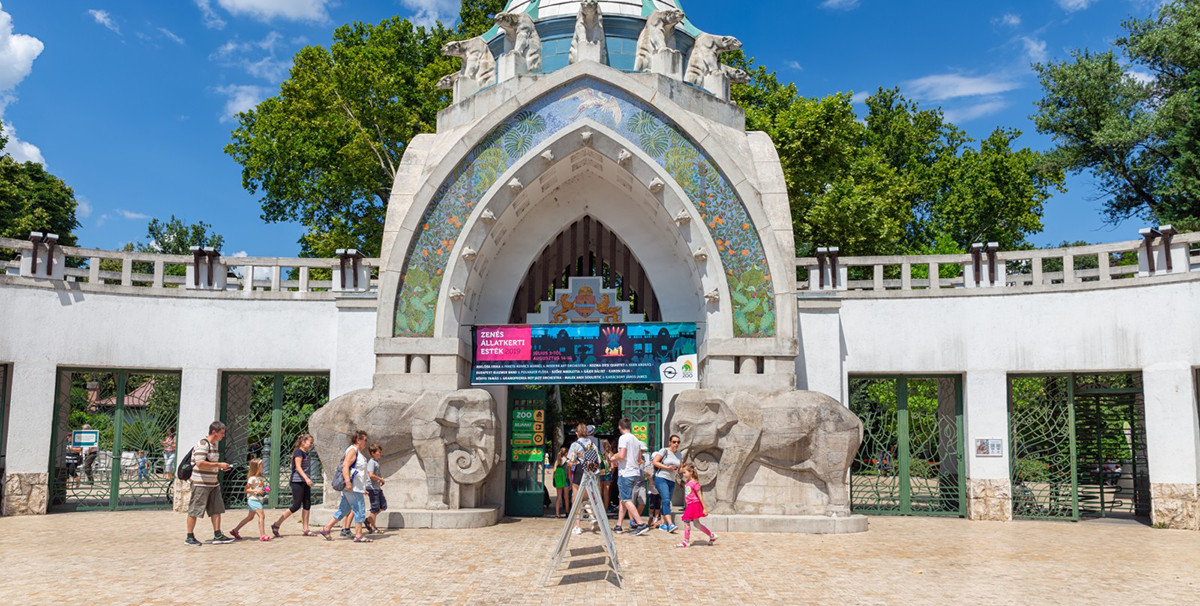
Free entry to 20+ attractions, unlimited transport, walking tours & save up to 50% on Budapest experiences

If you’re driving to the Budapest Zoo, here’s what you need to know about parking!

Budapest Zoo - Where to park?

Parking near Budapest Zoo

One of the most important things to know before visiting Budapest Zoo is that parking spaces in the immediate area are usually difficult to find. The small parking areas and nearby streets can fill up quickly, especially on weekends and holidays.

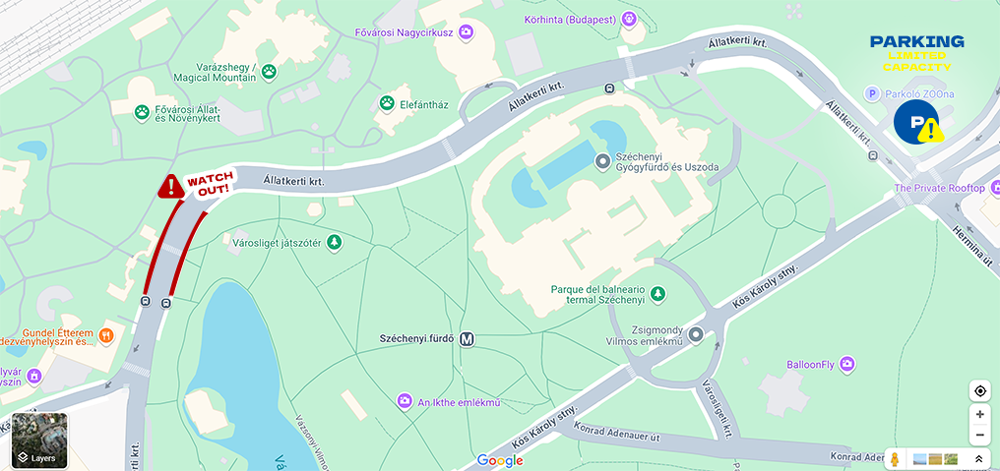
Around the Budapest Zoo, parking spots are usually hard to find. There is a small paid parking lot right next to the zoo, but it has very limited capacity — so it’s worth looking for alternative parking options in advance.

If you do find an empty spot on the nearby streets, make sure to check whether parking or stopping is not prohibited by local traffic regulations. It’s not worth taking the risk — cars are often quickly towed or clamped in this area.
Where to park near Budapest Zoo?

It’s called Múzeum Mélygarázs, so that’s the name you should search for in your navigation app. Use the buttons below to get directions via Google Maps or Waze.

Our recommendation

Múzeum Mélygarázs

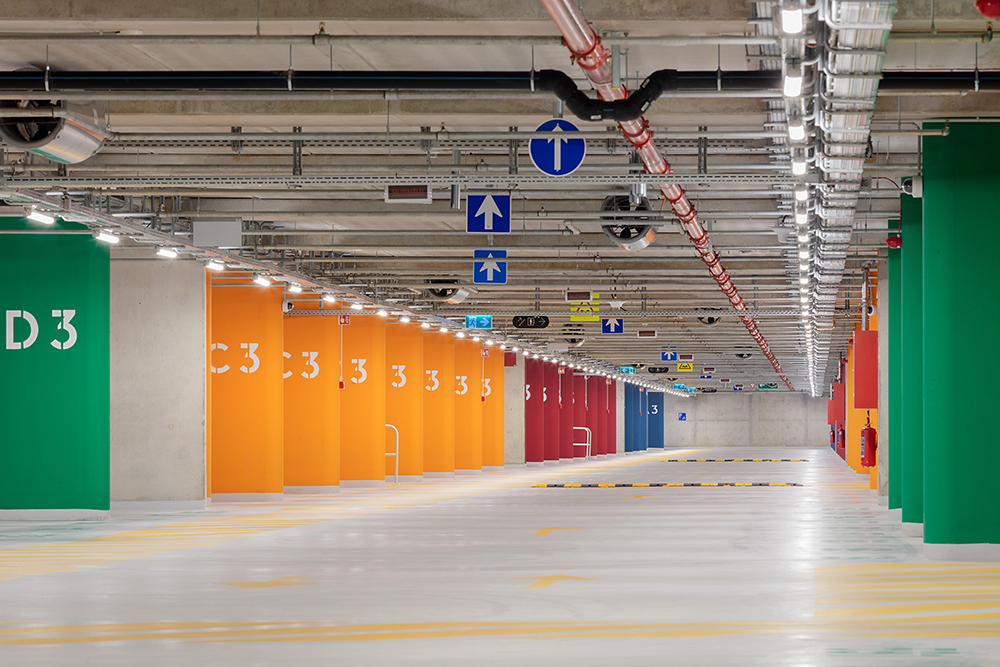
As local residents, we recommend the Múzeum Mélygarázs underground garage in City Park (Városliget). It is around a 10-minute walk from Budapest Zoo and, with capacity for approximately 800 cars, it is generally a much more reliable option than searching for a space directly next to the Zoo.

≈ 800

parking spaces

10 min

walk to the Zoo

24/7

open every day

Search for “Múzeum Mélygarázs” in your navigation app:
Parking directly around the Zoo

Street parking and the nearby Parkoló ZOOna have very limited capacity and can fill up quickly. Always check the local traffic signs before parking. Parking or stopping in restricted areas can result in fines, clamping or towing.

Yes, they really do clamp illegally parked cars

We know that warnings about parking fines and wheel clamps can sometimes sound overly cautious. Unfortunately, around Budapest Zoo they are very real. We have collected just a few examples from the many cases we have seen where cars parked illegally ended up with a wheel clamp.

⚠️ Don’t assume “I’ll only be here for a few minutes” is safe

Parking restrictions around the Zoo are actively enforced. Even if a space looks convenient or other cars are parked nearby, always check the traffic signs before leaving your car. A wheel clamp can quickly turn a family day at the Zoo into an expensive and stressful experience.
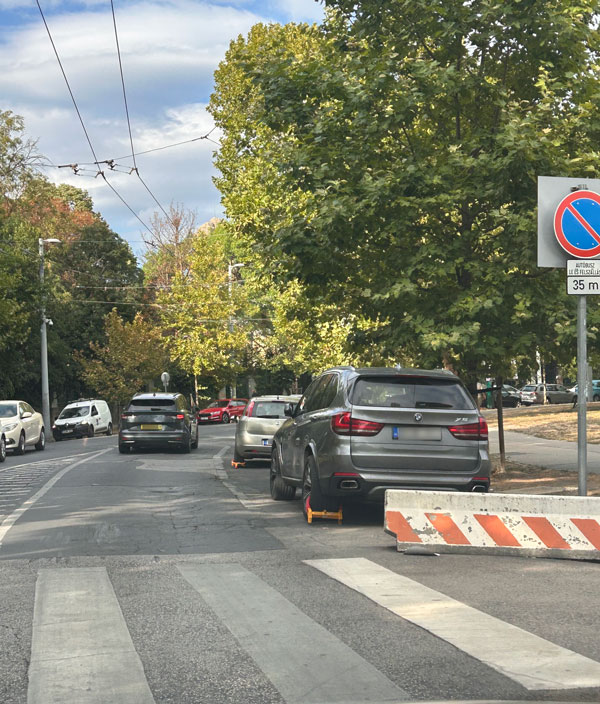
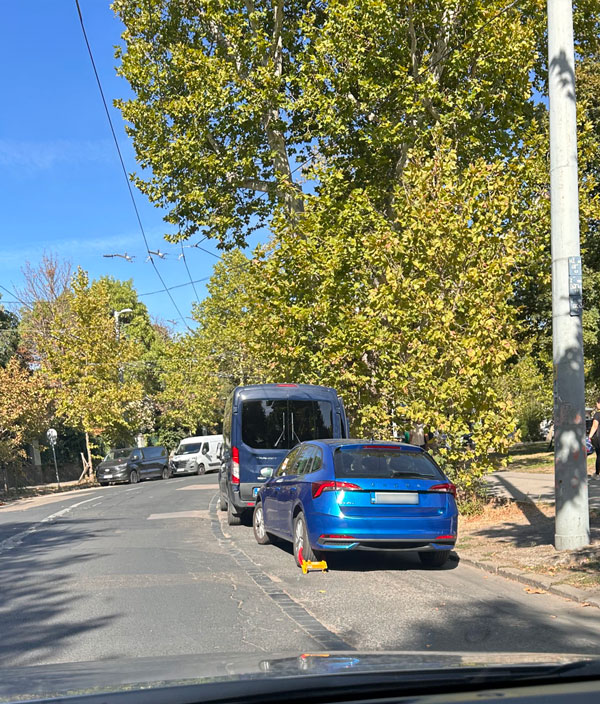
These photos are shown as real-life examples to highlight the importance of following local parking regulations. Our goal isn’t to scare visitors — it’s to help you avoid an unnecessary fine, wheel clamp or towing during your visit.

💡 Extra Tip

If you’re navigating from the garage to the Zoo, search for “Fővárosi Állat- és Növénykert”. During weekends and holidays, the Zoo and surrounding area can get especially crowded, so arriving early can make both parking and your visit easier.

Save money & skip the parking hassle

Visiting Budapest with a Budapest Card?

A Budapest Card includes free public transport and offers 20% off Budapest Zoo admission. Metro Line 1 stops at Széchenyi fürdő, right next to the Zoo — so you can leave the car behind entirely.

See Budapest Card options →

Our Recommendation

As a local living in Budapest, I recommend the following:

What we don’t recommend

✕

Don’t try to find a parking spot on the street right next to the Budapest Zoo. It’s almost always full. The area is packed with attractions, and both tourists and locals frequently visit, making parking nearly impossible.

✕

Don’t try to park at the Parkoló ZOOna on the corner. It’s usually full. The lot is too small and fills up quickly — sometimes it’s already at full capacity by noon.

✕

Don’t park directly in front of the Zoo. It violates local traffic regulations, and your car could be quickly clamped or even towed away.

What we recommend instead

✓

Choose the Múzeum Mélygarázs in City Park. It’s about a 10-minute walk from the Zoo, but you’ll almost certainly find a parking spot. This way, your amazing family day won’t start with stress or waiting around.

✓

If you have a Budapest Card, we recommend parking your car at the free P+R parking lot at Mexikói út and travelling one stop on Metro Line 1.

Want to enter Budapest Zoo without waiting in line? Buy your Budapest Zoo Tickets online and get ready for your visit in advance.

If it’s summer then Balaton! Come to us and see it from above

[row]

[col span__sm=”12″]

Lake Balaton, often referred to as the “Hungarian Sea,” is a popular tourist destination for several compelling reasons:

[/col]

[/row]
[row]

[col span__sm=”12″]

1. Natural Beauty and Scenery

Lake Balaton is the largest freshwater lake in Central Europe, offering stunning landscapes, including:

  • Crystal-clear waters: Ideal for swimming, boating, and other water sports.
  • Beautiful beaches: Both sandy and grassy shores cater to different preferences.
  • Scenic surroundings: Rolling hills, vineyards, and charming towns around the lake provide picturesque views.

2. Recreational Activities

Visitors to Lake Balaton can enjoy a wide variety of activities:

  • Water sports: Sailing, windsurfing, kayaking, and fishing are popular.
  • Cycling and hiking: Numerous trails offer routes through vineyards, forests, and around the lake.
  • Wine tasting: The region is famous for its wine production, especially around Badacsony.

3. Cultural and Historical Attractions

The area around Lake Balaton is rich in cultural heritage:

  • Historic towns: Cities like Keszthely, with its baroque Festetics Palace, and Tihany, known for its ancient abbey, offer historical insights.
  • Festivals and events: Annual music and cultural festivals attract large crowds, showcasing local traditions and international performances.

4. Family-friendly Environment

Lake Balaton is an excellent destination for families due to:

  • Shallow waters: The lake’s gentle slopes make it safe for children.
  • Adventure parks and zoos: Attractions like the Balaton Adventure Park and the Keszthely Zoo are great for family outings.
  • Child-friendly amenities: Resorts and restaurants often provide facilities and menus catering to families with children.

5. Wellness and Relaxation

The region is renowned for its wellness and spa offerings:

  • Thermal baths: Nearby Hévíz Lake is famous for its thermal waters, providing therapeutic benefits.
  • Spas and wellness centers: Many hotels and resorts offer extensive wellness facilities, including saunas, massages, and beauty treatments.

6. Gastronomy

Lake Balaton’s culinary scene is another highlight:

  • Local cuisine: Traditional Hungarian dishes, fresh fish from the lake, and local produce are featured in many restaurants.
  • Wine and dining: The wine regions around the lake, particularly Badacsony, are known for their unique wines, which can be enjoyed at numerous wine cellars and restaurants.

7. Mild Climate

Lake Balaton enjoys a mild climate, making it a pleasant destination for most of the year:

  • Warm summers: Ideal for beach activities and outdoor exploration.
  • Mild winters: Perfect for spa visits and enjoying the quieter off-season charm.

These diverse attractions and amenities make Lake Balaton a beloved destination for tourists seeking relaxation, adventure, cultural experiences, and natural beauty.

[/col]

[/row]
[row]

[col span__sm=”12″]

Due to the plethora of opportunities and attractions listed above, we have dreamed up our Balaton Panorama Flight package, which can make this experience even more special. Book your appointment as soon as possible and enjoy this great program with us! It really is different from above 🙂

https://setarepulesbudapest.hu/setarepules-arak/balatoni-panorama-setarepules/

[/col]

[/row]

Are you coming to Budapest soon and want to participate in some really cool program?

[row]

[col span__sm=”12″]

Are you coming to Budapest and thinking about something really cool? Let me introduce you to one of our options, drift education.

[/col]

[/row]
[row]

[col span__sm=”12″]

Drift training offers numerous benefits that go beyond the simple thrill of driving. Below, I detail why it’s worth participating in such a course.

[/col]

[/row]
[row]

[col span__sm=”12″]

Firstly, drift training enhances vehicle control. During drifting, drivers learn how to react quickly and effectively to the car’s behavior, especially in slippery or challenging conditions. This skill is useful in everyday driving, particularly in emergencies that require quick decisions and precise movements.

Secondly, drift training boosts confidence. As drivers become more proficient in various maneuvers, their confidence in handling the vehicle increases. This confidence carries over to normal road driving, resulting in safer and more assured driving.

Thirdly, drift training is fun and exciting. Drivers enjoy the challenge and the adrenaline that comes with drifting. It’s a great way to break away from the daily routine and enjoy the thrill of driving in a safe environment under the supervision of experts.

Fourthly, drift training has a community-building effect. Drift enthusiasts often form communities, sharing experiences and advice with each other. These connections not only help in developing driving skills but also build friendships.

Lastly, drift training can help reduce stress. The combination of intense concentration and physical activity helps to disconnect from everyday stressors while being in control of the car.

In summary, drift training not only improves driving skills but also boosts confidence, provides entertainment, builds a community, and helps in managing stress. These benefits all contribute to making drift training an excellent choice for anyone looking to enhance their driving abilities and enjoy every moment behind the wheel.

[/col]

[/row]
[row]

[col span__sm=”12″]

In recent years, drift education has become an increasingly widespread and popular program in our country. Therefore, I recommend that anyone who knows they are coming to Budapest and wants to do something cool, make an appointment as soon as possible! What does as soon as possible mean? at least 2-3 weeks, please take this into account.

https://budapestexperiences.com/shop/drifting-experiences-in-budapest/

[/col]

[/row]

Why is the quad tour an exciting program?

[row]

[col span__sm=”12″]

Riding quads, also known as all-terrain vehicles (ATVs), is a popular and exhilarating outdoor activity for many reasons. Here are some key points that highlight why riding quads is considered a cool thing to do:

Thrill and Adventure:

  1. Adrenaline Rush: Riding a quad offers a unique thrill, combining speed with the ability to traverse challenging terrains. The excitement of navigating through rough trails, steep inclines, and open fields provides a significant adrenaline rush.
  2. Exploration: Quads can take you to places that are inaccessible by other vehicles. Exploring remote and rugged landscapes, including forests, deserts, and mountains, allows for a true sense of adventure and discovery.

Skill Development:

  1. Driving Skills: Operating a quad enhances your driving abilities, particularly in terms of handling, balance, and control. Learning to navigate different terrains can improve overall vehicle maneuvering skills.
  2. Mechanical Knowledge: Maintaining and understanding the mechanics of a quad can also be educational. It involves learning about engines, suspension systems, and other mechanical components, which can be a rewarding hobby.

Social and Community Aspects:

  1. Group Activities: Quad riding is often enjoyed in groups, making it a social activity. It’s a great way to bond with friends and family, or to meet new people who share the same interest.
  2. Events and Competitions: There are numerous ATV events and competitions that riders can participate in or spectate, ranging from casual group rides to professional races and rallies.

Physical and Mental Benefits:

  1. Exercise: Riding a quad requires physical effort, which can be a good workout for various muscle groups, especially when navigating challenging terrains.
  2. Stress Relief: Being outdoors and engaging in an exciting activity can be a great way to relieve stress. The combination of fresh air, natural surroundings, and the fun of riding can improve mental well-being.

Connection with Nature:

  1. Immersive Experience: Riding a quad allows for an immersive experience in nature, providing a closer connection to the environment compared to driving in an enclosed vehicle. The sights, sounds, and even the smells of the outdoors are more pronounced.
  2. Wildlife Viewing: Quads can take you to remote areas where you might encounter wildlife, offering unique opportunities for photography and observation.

[/col]

[/row]
[row]

[col span__sm=”12″]

And do you know what’s the best part? That you have the opportunity to experience this great program with us! You can find us in Domonyvölgy, and you can read about and purchase our quad tours through the link. It is important to register at least 2 weeks in advance.

https://budapestexperiences.com/shop/atv-quad-tours-in-budapest/

[/col]

[/row]

Public transport is Budapest

[row]

[col span__sm=”12″]

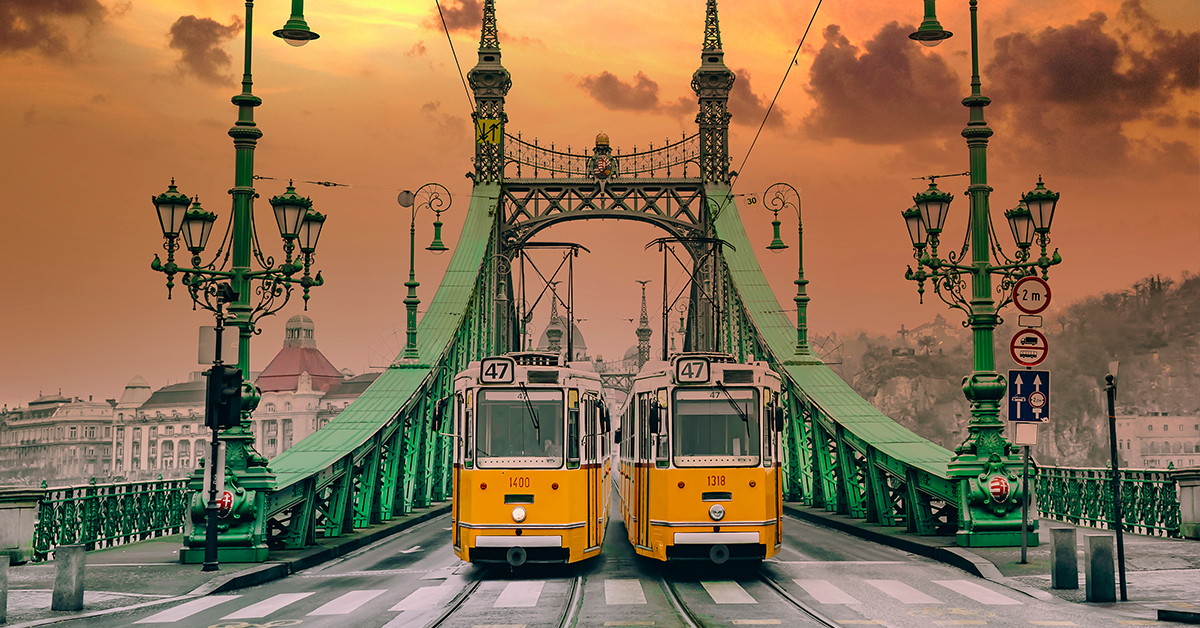
Budapest offers an efficient and convenient transportation system for tourists to explore the city. With its extensive network of metro lines, trams, buses, and ferries, getting around is easy. The iconic yellow trams provide scenic routes through the city center, while the historic Metro Line 1, the oldest in continental Europe, connects major landmarks. Visitors can also enjoy cruising along the Danube River on sightseeing boats, offering unique perspectives of Budapest’s stunning architecture. For added convenience, tourists can purchase various passes, including the Budapest Card, which offers unlimited access to public transport along with discounts to many attractions.

[/col]

[/row]
[row]

[col span__sm=”12″]

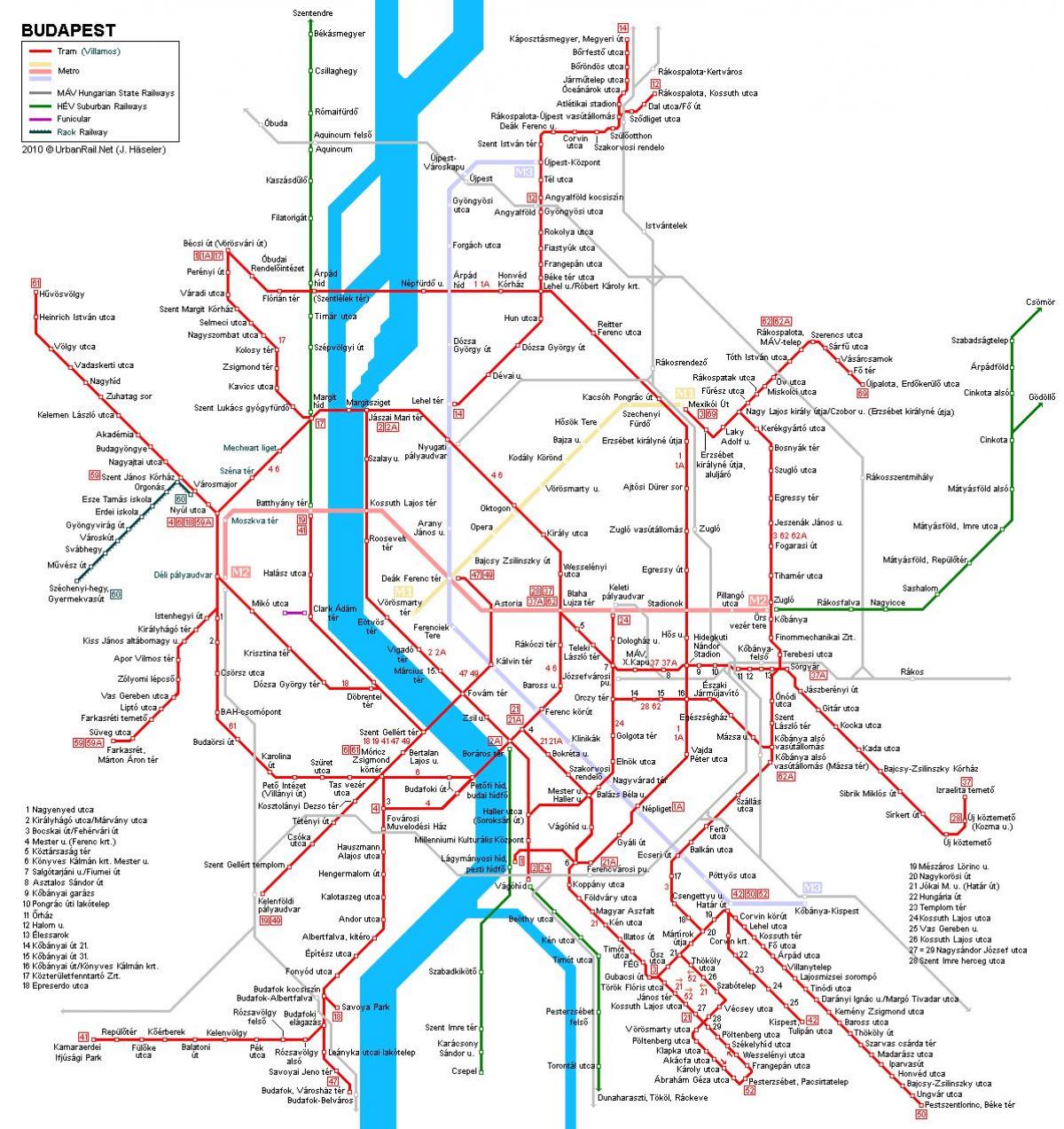
Budapest’s transport options for tourists include:

https://bkk.hu/en/tickets-and-passes/prices/

1. Trams: Iconic yellow trams offering scenic routes along the Danube River and through historic districts.

**Network**:

Budapest has an extensive tram network that covers most parts of the city. Trams run along various routes, connecting residential areas, commercial districts, and tourist attractions.

**History**:

The tram system in Budapest has a rich history, dating back to the late 19th century. The first electric tram line started operating in 1887, and since then, the network has expanded significantly.

 **Types of trams**:

The city operates various types of trams, including old-fashioned heritage trams and modern, low-floor trams. The modern trams are more prevalent and accessible, especially on the main lines.

**Ticketing**:

Passengers can purchase tickets at tram stops or from ticket machines on board. There are various ticket options available, including single tickets, day passes, and multi-day passes. Tickets must be validated upon boarding.

**Frequency**:

Trams in Budapest generally run frequently, with intervals ranging from a few minutes during peak hours to around 10-15 minutes during off-peak times.

**Accessibility**:

Many of the newer trams are designed to be accessible for people with disabilities, featuring low floors and ramps for easy boarding. However, some older trams may not be as accessible.

 **Popular routes**:

Some of the most popular tram routes for tourists include Line 2 along the Danube River, offering scenic views of Buda and Pest, as well as Line 4 and 6, which run along the Grand Boulevard, connecting major landmarks and transport hubs.

 **Night trams**:

Budapest also operates night trams, providing 24-hour service on certain routes. Night trams are particularly useful for those exploring the city’s nightlife or returning home late

**Maintenance**:

The tram network undergoes regular maintenance to ensure safety and reliability. Sometimes, this may result in temporary route changes or disruptions, which are usually communicated in advance.
**Integration with other transport modes**:

The tram system is integrated with other forms of public transportation, including buses, metro lines, and suburban railways, allowing passengers to easily transfer between different modes of transport.

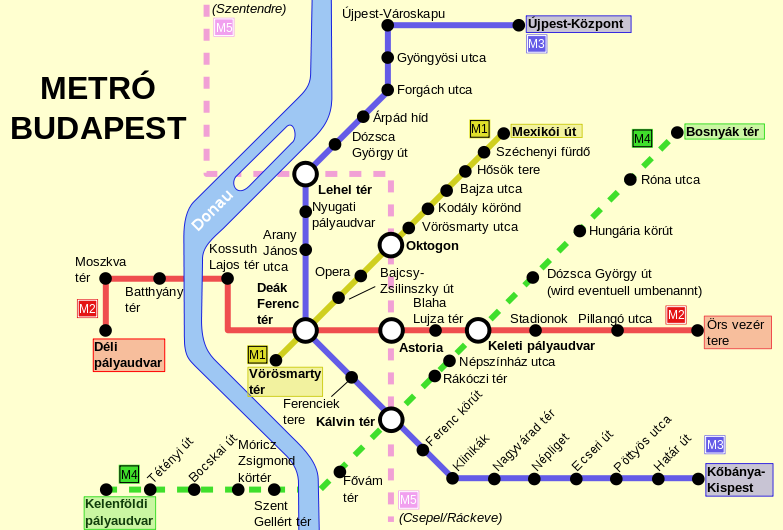
2. Metro: Four metro lines connecting major landmarks and attractions efficiently, such as Heroes’ Square and the Parliament.


 **Lines**: Budapest Metro consists of four lines:

– Line M1 (Yellow Line): It is the oldest metro line in Budapest, dating back to 1896. It connects Vörösmarty tér in the city center with Mexikói út in the northwest.
– Line M2 (Red Line): Running from Déli pályaudvar (Southern Railway Station) to Örs vezér tere in the eastern part of the city, Line 2 intersects the city center and serves important transfer points.
– Line M3 (Blue Line): Line 3 connects the northern and southern parts of Pest, running from Újpest-Központ to Kőbánya-Kispest, passing through the city center. It is the longest line in the Budapest Metro.
– Line M4 (Green Line): The newest addition to the metro network, Line 4 connects Kelenföld vasútállomás in the southwest with Keleti pályaudvar (Eastern Railway Station) in the northeast.

**History**:

The first metro line in Budapest (Line M1) was opened in 1896, making it one of the oldest underground railways in the world. Since then, the metro system has expanded and evolved to meet the city’s growing transportation needs.

 **Tickets and Fare**:

Passengers can purchase tickets at metro stations or from vending machines. Like trams and buses, tickets need to be validated before boarding. Budapest operates on a time-based fare system, where one ticket allows a certain duration of travel (usually 80 minutes) on all forms of public transport within the city.

 **Frequency**:

Metro trains run frequently, especially during peak hours, with intervals ranging from a few minutes to around 10 minutes during off-peak times.

**Accessibility**:

Most metro stations are equipped with elevators, escalators, and tactile paving to assist passengers with disabilities. The newer stations on Line 4 are designed to be fully accessible.

**Architecture and Design**:

Many of Budapest’s metro stations feature unique architectural elements, reflecting the city’s rich history and cultural heritage. Some stations, like the ones on Line M1, are even designated UNESCO World Heritage sites.

 **Integration with other transport modes**:

The metro system is well-integrated with other modes of public transportation, including trams, buses, and suburban railways, facilitating easy transfers between different lines and routes.


3. Buses: Well-connected bus network providing access to areas not covered by trams or metro lines.

 
 **Network**:
Budapest’s bus network covers the entire city, including both Buda and Pest sides, as well as suburban areas. There are numerous bus routes, ranging from local lines serving neighborhoods to express routes connecting distant parts of the city.
 
 **Types of buses**:
Budapest operates a fleet of modern, low-floor buses, offering improved accessibility for passengers, including those with disabilities or strollers. Additionally, there are some heritage buses preserved for special occasions and events.
 
 **Routes and Frequency**:
Bus routes vary in frequency depending on the time of day and the specific route. Generally, buses run frequently during peak hours and less frequently during off-peak times. Express buses usually have fewer stops and run at higher frequencies.
 
 **Night buses**:
Budapest operates a night bus service called “Éjszakai Járatok” (Night Lines) to provide transportation during the night hours when other forms of public transport are less frequent or unavailable. These night buses cover various routes across the city and operate at regular intervals throughout the night.
 
 **Ticketing**:
Passengers can purchase tickets at bus stops, from ticket machines, or directly from the driver when boarding. As with trams and metro, tickets need to be validated upon boarding the bus.
 
 **Bus stops**:
Bus stops are marked with signs indicating the routes that stop there, along with route maps and schedules. Some major stops have shelters and seating for waiting passengers.
 
**Integration with other transport modes**:
Buses are integrated with the tram and metro systems, allowing for easy transfers between different modes of transport. Many bus routes connect to metro stations and tram lines, facilitating convenient journeys across the city.
 
**Special services**:
In addition to regular bus services, Budapest offers specialized bus services, such as airport shuttle buses and tourist sightseeing buses. These services cater to specific needs, providing direct connections to the airport or showcasing the city’s attractions to visitors.
 
**Real-time information**:
Many bus stops in Budapest are equipped with electronic displays showing real-time information about bus arrival times, making it easier for passengers to plan their journeys.
 
 **Accessibility**:
Budapest is gradually improving accessibility on its buses, with more low-floor vehicles and better facilities for passengers with reduced mobility.

[/col]

[/row]
[row]

[col span__sm=”12″]

Would you like to be informed about the current traffic situation? This is a great site where you will be informed of the current traffic situation in Budapest, which is updated every minute.

https://kozut.bkkinfo.hu/

[/col]

[/row]

Sightseeing in Budapest

[row]

[col span__sm=”12″]

Why is pleasure flight a good program?

[/col]

[/row]
[row]

[col span__sm=”12″]

Sightseeing by air in Budapest can be a fantastic experience! Viewing the city from the sky provides a unique perspective to admire the beauty and landmarks of the city. Among our package offerings, we provide numerous programs that can be viewed either by helicopter or scenic flight. These typically follow a predetermined route, but there is also the possibility to create a customized route if desired.


During a typical walking flying city tour, you can see landmarks such as the Parliament, the Buda Castle District, the Chain Bridge, the Széchenyi Chain Bridge, Matthias Church, Fisherman’s Bastion, and Gellért Hill. Viewing the Danube from above also offers a special experience as you can see both sides of the city, Buda and Pest, as well as the architectural wonders along the river.

[ux_text font_size=”0.95″]

Here are some of our pleausre flight packages through which the listed landmarks can be visited:

[/ux_text]

However, it is important to note that scenic flights for city tours generally require advance booking and are subject to weather conditions. If you are interested in such an experience, I suggest you inquire in advance to find out the details and available time slots.

Would you like to learn more about the possibilities? Visit our website: https://setarepulesbudapest.hu/

[/col]

[/row]

What can you do outside Budapest?

[row]

[col span__sm=”12″]

Outside of Budapest, Hungary offers a variety of attractions and destinations to explore. Here are some recommendations

[/col]

[/row]
[row]

[col span__sm=”12″]

1: Esztergom: Known for its stunning basilica, Esztergom is a historic city located on the banks of the Danube River. The Basilica of Esztergom is the largest church in Hungary and offers breathtaking views of the surrounding area.

2: Eger: Famous for its historic castle and thermal baths, Eger is a charming town in northern Hungary. Visitors can explore the castle, visit the thermal baths, and enjoy the local wine, particularly the famous red wine called Egri Bikavér (Bull’s Blood).

Read more

Cool things to do in Budapest

[row]

[col span__sm=”12″]

Certainly! Budapest, the capital of Hungary, offers a wealth of experiences for visitors. Here are some cool things you can do in Budapest:

[/col]

[/row]
[row]

[col span__sm=”12″]

1. Visit Buda Castle

Explore this historic castle complex located on the Castle Hill, offering stunning views of the Danube River and the city. Don’t miss the Hungarian National Gallery and the Budapest History Museum housed within the castle.


2. Relax in the Széchenyi Thermal Bath

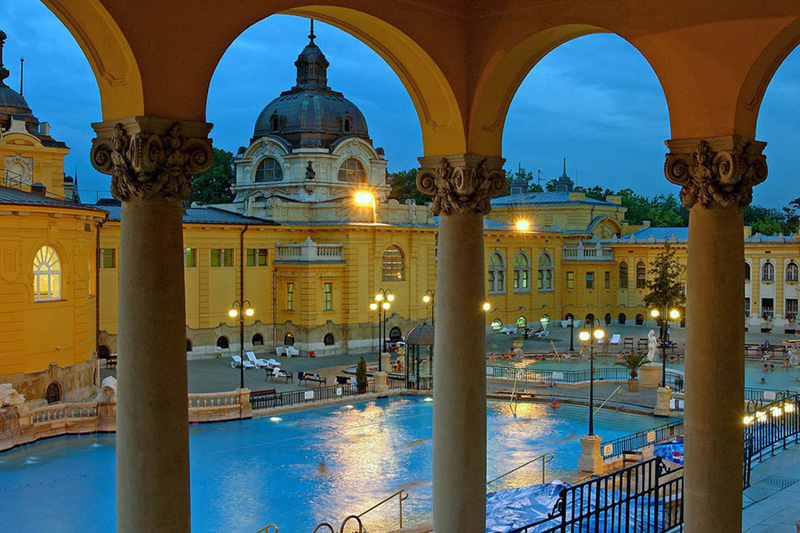
 Enjoy a rejuvenating experience in one of Budapest’s famous thermal baths. Széchenyi Thermal Bath is the largest and one of the most popular baths in the city, featuring both indoor and outdoor pools.

3. Walk along the Danube Promenade

Take a leisurely stroll along the Danube River to admire iconic landmarks such as the Hungarian Parliament Building, Buda Castle, and the Chain Bridge. The view of Budapest’s skyline is particularly beautiful at sunset.

4. Explore the Ruin Bars

Budapest is known for its unique ruin bars, which are located in abandoned buildings and courtyards. These bars are filled with eclectic decor, street art, and a vibrant atmosphere. Szimpla Kert is one of the most famous ruin bars in the city.

5. Discover Hungarian Cuisine

Indulge in traditional Hungarian dishes such as goulash, langos (fried dough), and chimney cake. Visit the Central Market Hall to sample local delicacies and buy souvenirs.

6. Take a Danube River Cruise

See Budapest from a different perspective by taking a scenic cruise along the Danube River. Daytime and evening cruises are available, allowing you to enjoy breathtaking views of the city’s landmarks illuminated at night.

7. Visit the House of Terror Museum

Gain insight into Hungary’s turbulent 20th-century history at the House of Terror Museum, which documents the atrocities committed by fascist and communist regimes. The museum is housed in the former headquarters of the Nazi and Soviet secret police.

8. Explore the Jewish Quarter

 Wander through Budapest’s historic Jewish Quarter, home to Europe’s largest synagogue and a thriving cultural scene. Visit the Jewish Museum, the Holocaust Memorial Center, and explore the area’s trendy bars and cafes.

9. Climb Gellért Hill

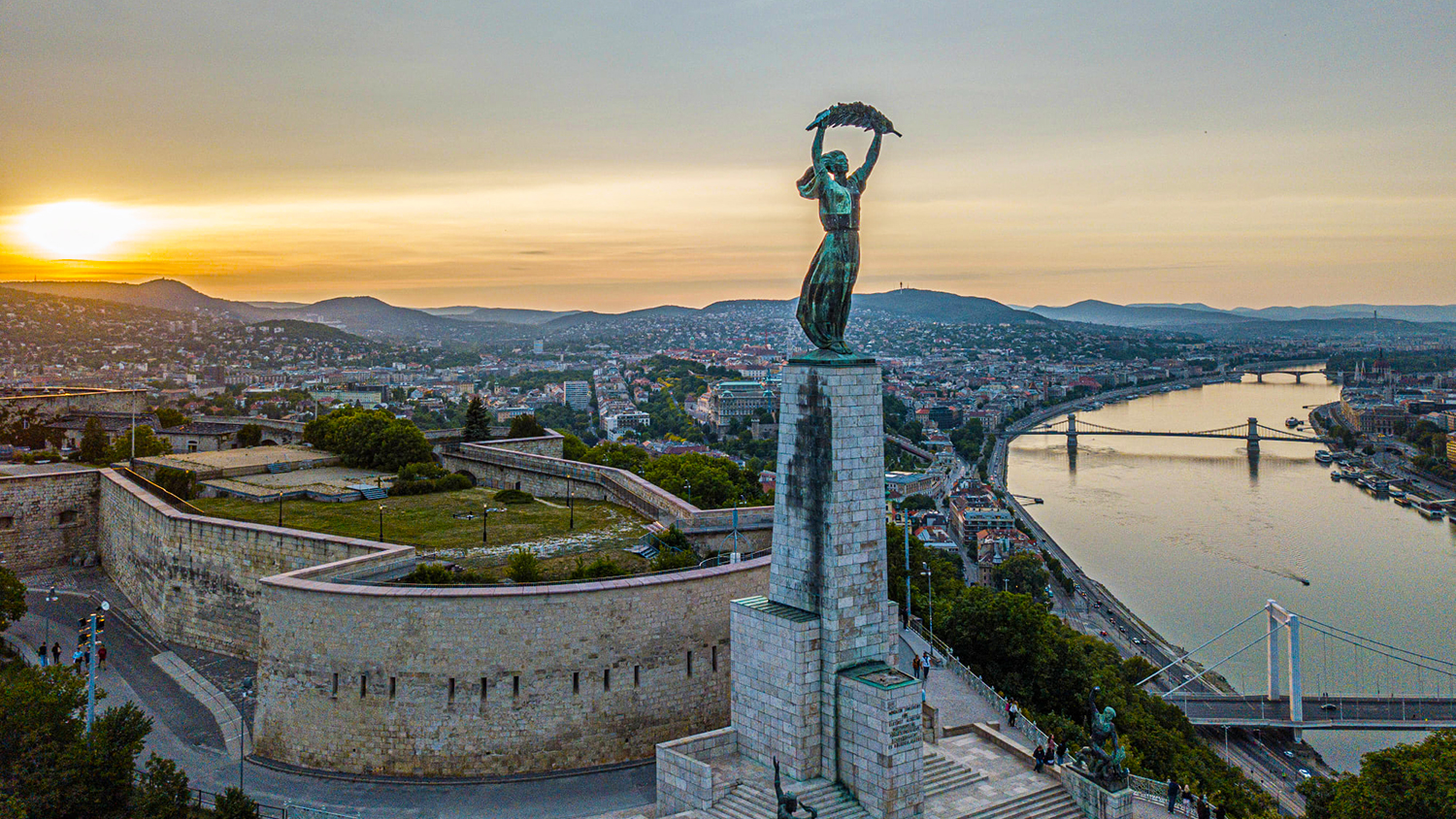
Hike or take a leisurely walk up Gellért Hill to enjoy panoramic views of Budapest and the Danube River. Don’t miss the Citadella fortress and the Liberty Statue located at the top of the hill.


10. Attend a Cultural Event

Check out Budapest’s vibrant cultural scene by attending a classical music concert, opera performance, or traditional Hungarian folk dance show.


These are just a few ideas to get you started on your Budapest adventure. With its rich history, stunning architecture, and vibrant culture, Budapest has something to offer every visitor

[/col]

[/row]

Discover the Charm: The Most Beautiful Places and Top 10 Things to See in Budapest

[row]

[col span__sm=”12″]

Budapest, the enchanting capital of Hungary, is a city that seamlessly blends rich history, stunning architecture, and vibrant culture. For those seeking the most beautiful places and the top 10 things to see in Budapest, this guide is your key to unlocking the city’s treasures.

The Most Beautiful Places in Budapest:

[/col]

[/row]
[row]

[col span__sm=”12″]

1. Buda Castle

Perched on the Castle Hill, Buda Castle offers panoramic views of the city. Its majestic architecture and historical significance make it one of the most beautiful places in Budapest. Check out our Guide about exploring the Buda Castle

[ux_slider slide_width="50%" margin="50px" nav_pos="outside"]

[ux_image id="1332" width="43" class="broader-pic"]

[ux_image id="1253" class="broader-pic"]

[/ux_slider]
[button text="Go now" radius="99" icon="icon-map-pin-fill" icon_pos="left" link="https://www.google.com/maps/dir//Budapest,+H%C5%91s%C3%B6k+tere,+1146+Hungary/@47.5148681,19.0751139,17z/data=!4m8!4m7!1m0!1m5!1m1!1s0x4741dc78075248b3:0x28dfa4f6eb4fe576!2m2!1d19.0778626!2d47.5149428?entry=ttu"]

[button text="More info" radius="99" link="https://budapestexperiences.com/exploring-the-most-beautiful-places-in-budapest-top-10-must-see-attractions-including-buda-castle/%22]

[/col]
[col span__sm="12"]

2. Fisherman’s Bastion

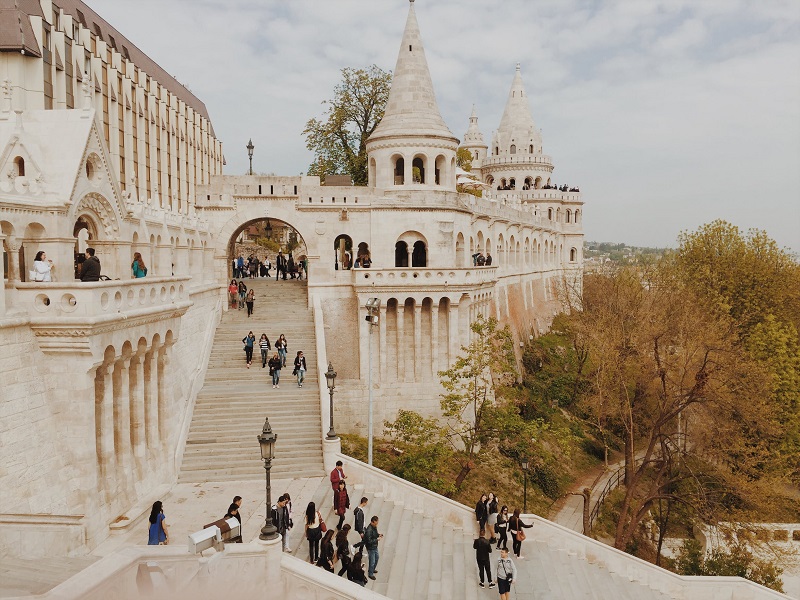
An iconic landmark, Fisherman’s Bastion is a fairytale-like structure that provides breathtaking vistas of the Danube River and the city. It’s a must-visit for those seeking Budapest’s beauty.

3. Parliament Building

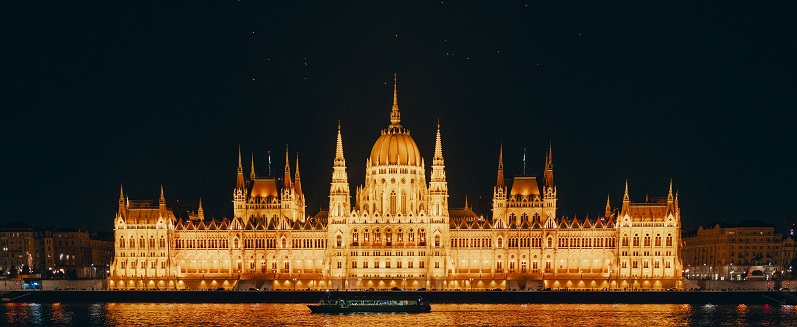
A symbol of Hungarian democracy, the Parliament Building’s Gothic Revival architecture is awe-inspiring. Lit up at night, it creates a mesmerizing reflection on the Danube.

4. Heroes’ Square

Surrounded by statues of historical leaders, Heroes’ Square is a grandiose space that pays tribute to Hungary’s national heritage. The Millennium Monument at its center is a sight to behold.

5. Margaret Island

Nestled in the Danube, Margaret Island is a serene retreat boasting parks, medieval ruins, and musical fountains. It’s a haven for nature lovers seeking beauty away from the urban bustle. And how can you make this experience even more unforgettable? By viewing the entire program from a small airplane or helicopter. You have the option to choose whether to go solo for a one-person flight or share the experience with 2-3 people. In the case of helicopter flights, a maximum of 5 people can travel at once. Let’s admit it, quite a cool program opportunity, isn’t it?

On our website, we offer numerous scenic flight options, providing the opportunity for customers seeking a unique experience to explore Hungary and its landmarks. Examples of such programs include :

  •  the “Castle in the Clouds” scenic flight to Visegrád
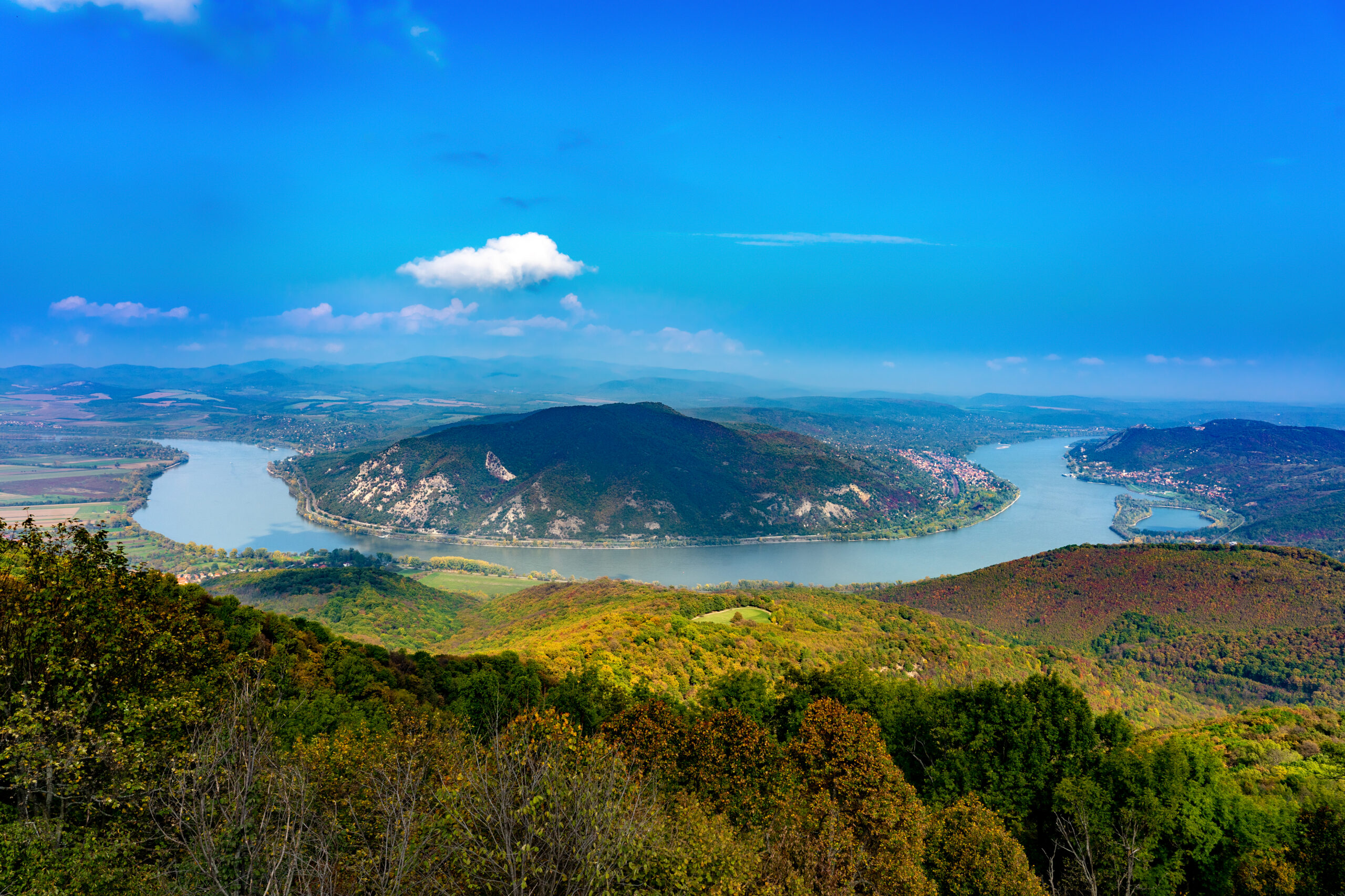
  •  the breathtaking Danube Bend tour
  •  the panoramic flight over Lake Balaton.

Top 10 Things to See in Budapest:

1. Chain Bridge:

Connecting Buda and Pest, the Chain Bridge is not just a crossing; it’s an architectural masterpiece. Walk across it for stunning views of the city.

2. St. Stephen’s Basilica:

This neoclassical marvel is home to Hungary’s most sacred relic, St. Stephen’s mummified hand. Climb to the dome for a bird’s-eye view of Budapest.

3. Dohány Street Synagogue:

The largest synagogue in Europe, Dohány Street Synagogue combines Byzantine, Romantic, and Gothic styles. Explore the Jewish Quarter for a cultural immersion.

4. Thermal Baths:

Budapest is famed for its thermal baths, including the Gellért Baths and Széchenyi Baths. Soak in the healing waters for a relaxing experience.

5. Ruin Bars in the Jewish Quarter:

Discover the unique atmosphere of Budapest’s ruin bars, located in abandoned buildings. Szimpla Kert is a pioneer, offering a quirky and artistic setting.

6. Hungarian National Museum:

Immerse yourself in Hungary’s history at the National Museum, home to an extensive collection of artifacts, art, and historical exhibits.

7. Vajdahunyad Castle:

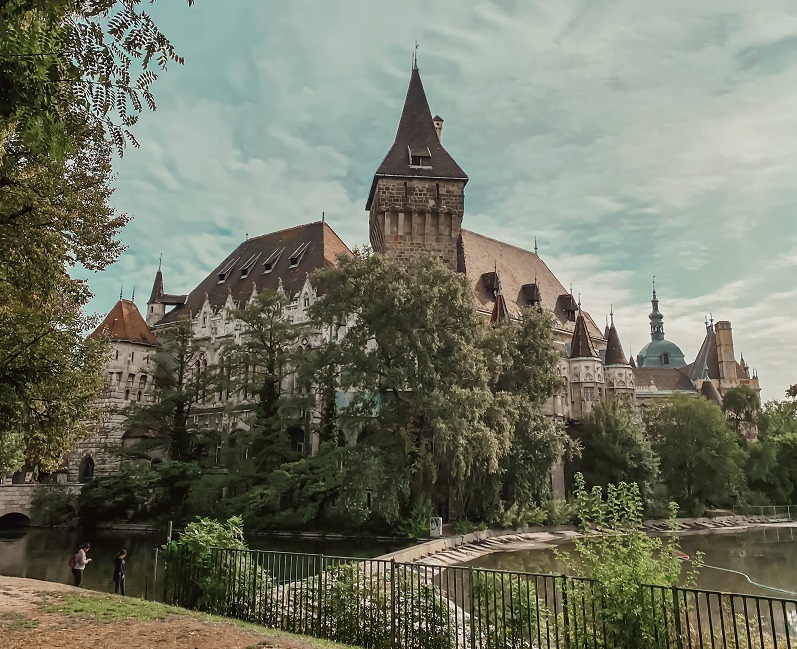
Located in the City Park, this castle is a blend of various architectural styles. It hosts the Agricultural Museum and provides a picturesque backdrop for a leisurely stroll.

Vajdahunyad Vár Budapest

8. Andrassy Avenue:

A UNESCO World Heritage site, Andrassy Avenue is lined with Neo-Renaissance mansions and shops. Explore the boutiques and cafes while admiring the architecture.

9. Danube Promenade:

Take a leisurely stroll along the Danube Promenade for breathtaking views of Buda Castle and the Parliament Building, especially beautiful at sunset.

10. Great Market Hall:

Immerse yourself in Hungarian gastronomy at the Great Market Hall. From fresh produce to local delicacies, it’s a sensory delight.

In conclusion, Budapest’s beauty lies in its seamless blend of history, architecture, and culture. Whether you’re captivated by panoramic views, historical landmarks, or vibrant city life, Budapest has something for everyone. Explore these most beautiful places and top 10 things to see in Budapest for an unforgettable experience in the heart of Europe.

And the most noteworthy aspect? You have the opportunity to experience the beauty of Budapest and its surroundings from the air during a pleasure flight. We are of the opinion that an aerial city tour has the potential to forge more enduring memories.

[/col]
[col span__sm=”12″]

[/col]
[col span__sm=”12″]

[/col]

[/row]

Need Help?