


Budapest offers an efficient and convenient transportation system for tourists to explore the city. With its extensive network of metro lines, trams, buses, and ferries, getting around is easy. The iconic yellow trams provide scenic routes through the city center, while the historic Metro Line 1, the oldest in continental Europe, connects major landmarks. Visitors can also enjoy cruising along the Danube River on sightseeing boats, offering unique perspectives of Budapest’s stunning architecture. For added convenience, tourists can purchase various passes, including the Budapest Card, which offers unlimited access to public transport along with discounts to many attractions.
Budapest’s transport options for tourists include:
https://bkk.hu/en/tickets-and-passes/prices/
1. Trams: Iconic yellow trams offering scenic routes along the Danube River and through historic districts.
**Network**:
Budapest has an extensive tram network that covers most parts of the city. Trams run along various routes, connecting residential areas, commercial districts, and tourist attractions.
**History**:
The tram system in Budapest has a rich history, dating back to the late 19th century. The first electric tram line started operating in 1887, and since then, the network has expanded significantly.
**Types of trams**:
The city operates various types of trams, including old-fashioned heritage trams and modern, low-floor trams. The modern trams are more prevalent and accessible, especially on the main lines.
**Ticketing**:
Passengers can purchase tickets at tram stops or from ticket machines on board. There are various ticket options available, including single tickets, day passes, and multi-day passes. Tickets must be validated upon boarding.
**Frequency**:
Trams in Budapest generally run frequently, with intervals ranging from a few minutes during peak hours to around 10-15 minutes during off-peak times.
**Accessibility**:
Many of the newer trams are designed to be accessible for people with disabilities, featuring low floors and ramps for easy boarding. However, some older trams may not be as accessible.
**Popular routes**:
Some of the most popular tram routes for tourists include Line 2 along the Danube River, offering scenic views of Buda and Pest, as well as Line 4 and 6, which run along the Grand Boulevard, connecting major landmarks and transport hubs.
**Night trams**:
Budapest also operates night trams, providing 24-hour service on certain routes. Night trams are particularly useful for those exploring the city’s nightlife or returning home late
**Maintenance**:
The tram network undergoes regular maintenance to ensure safety and reliability. Sometimes, this may result in temporary route changes or disruptions, which are usually communicated in advance.
**Integration with other transport modes**:
The tram system is integrated with other forms of public transportation, including buses, metro lines, and suburban railways, allowing passengers to easily transfer between different modes of transport.
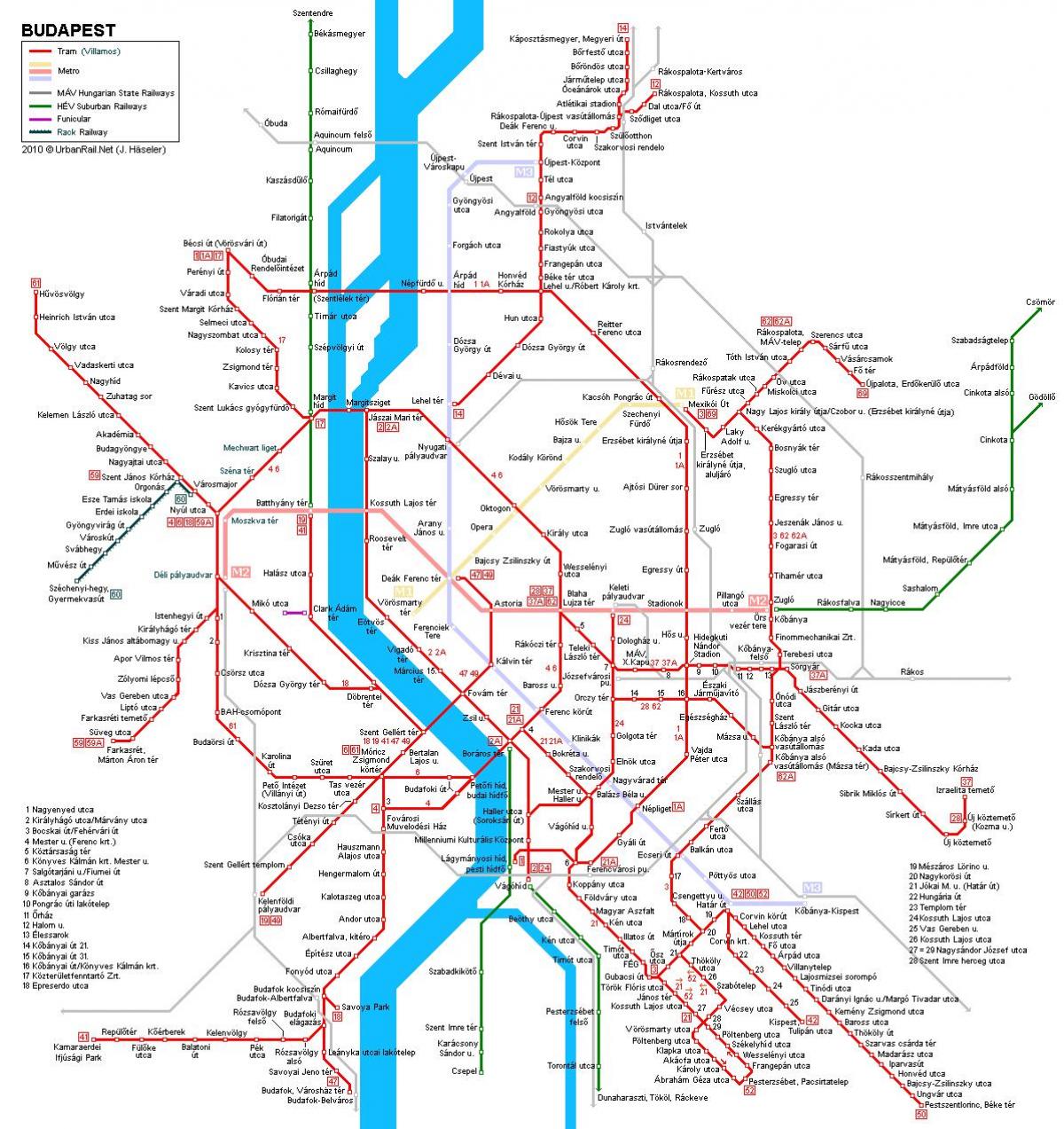
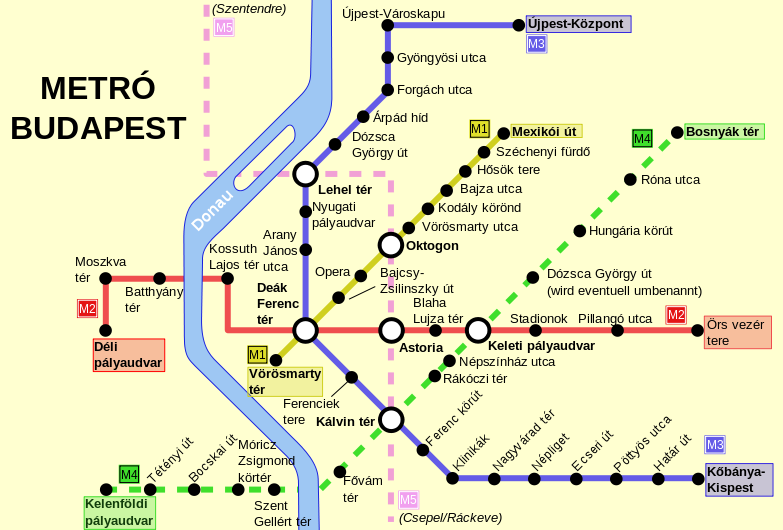
2. Metro: Four metro lines connecting major landmarks and attractions efficiently, such as Heroes’ Square and the Parliament.
**Lines**: Budapest Metro consists of four lines:
– Line M1 (Yellow Line): It is the oldest metro line in Budapest, dating back to 1896. It connects Vörösmarty tér in the city center with Mexikói út in the northwest.
– Line M2 (Red Line): Running from Déli pályaudvar (Southern Railway Station) to Örs vezér tere in the eastern part of the city, Line 2 intersects the city center and serves important transfer points.
– Line M3 (Blue Line): Line 3 connects the northern and southern parts of Pest, running from Újpest-Központ to Kőbánya-Kispest, passing through the city center. It is the longest line in the Budapest Metro.
– Line M4 (Green Line): The newest addition to the metro network, Line 4 connects Kelenföld vasútállomás in the southwest with Keleti pályaudvar (Eastern Railway Station) in the northeast.
**History**:
The first metro line in Budapest (Line M1) was opened in 1896, making it one of the oldest underground railways in the world. Since then, the metro system has expanded and evolved to meet the city’s growing transportation needs.
**Tickets and Fare**:
Passengers can purchase tickets at metro stations or from vending machines. Like trams and buses, tickets need to be validated before boarding. Budapest operates on a time-based fare system, where one ticket allows a certain duration of travel (usually 80 minutes) on all forms of public transport within the city.
**Frequency**:
Metro trains run frequently, especially during peak hours, with intervals ranging from a few minutes to around 10 minutes during off-peak times.
**Accessibility**:
Most metro stations are equipped with elevators, escalators, and tactile paving to assist passengers with disabilities. The newer stations on Line 4 are designed to be fully accessible.
**Architecture and Design**:
Many of Budapest’s metro stations feature unique architectural elements, reflecting the city’s rich history and cultural heritage. Some stations, like the ones on Line M1, are even designated UNESCO World Heritage sites.
**Integration with other transport modes**:
The metro system is well-integrated with other modes of public transportation, including trams, buses, and suburban railways, facilitating easy transfers between different lines and routes.
3. Buses: Well-connected bus network providing access to areas not covered by trams or metro lines.
Would you like to be informed about the current traffic situation? This is a great site where you will be informed of the current traffic situation in Budapest, which is updated every minute.